How Gold Refining Turns Raw Metal Into Pure Gold

Raw gold rarely leaves a mine in a usable state. Before it becomes jewelry, coins, or investment bars, it passes through a refining process that strips away impurities and raises its purity to exacting standards.
From Doré Bars to Pure Gold
Mining operations don’t produce pure gold directly. Instead, smelters at the mine site pour molten metal into rough bars called doré, a mix of gold, silver, and trace base metals like copper or zinc.
Doré bars typically range between 60% and 90% gold, depending on the ore source and the mine’s processing methods. This is where the real refining gold process begins, since doré still needs significant purification before it meets industry standards.
Refineries receive these bars and treat them as raw material, breaking down their exact composition through assay testing before choosing a refining method.
Why Impurities Matter
Silver and copper are the most common impurities found alongside mined gold. Left untreated, these metals affect gold’s color, weight, and market value.
Jewelers and investors expect consistency. A gold bar labeled 99.9% pure must actually contain that purity level, which is only possible once refiners separate out these secondary metals through chemical or electrolytic treatment.
Core Methods Used to Refine Gold
Refiners choose their method based on the required purity level, batch size, and cost considerations. Three techniques dominate the industry today.
Miller Process

The Miller process treats molten gold with chlorine gas. As the gas bubbles through the liquid metal, it binds with silver and base metals, forming chloride compounds that float to the surface and get skimmed away.
This method works fast and handles large volumes efficiently, making it a preferred choice at major refineries. It typically yields gold around 99.5% pure, sufficient for most commercial and jewelry applications.
Wohlwill Process
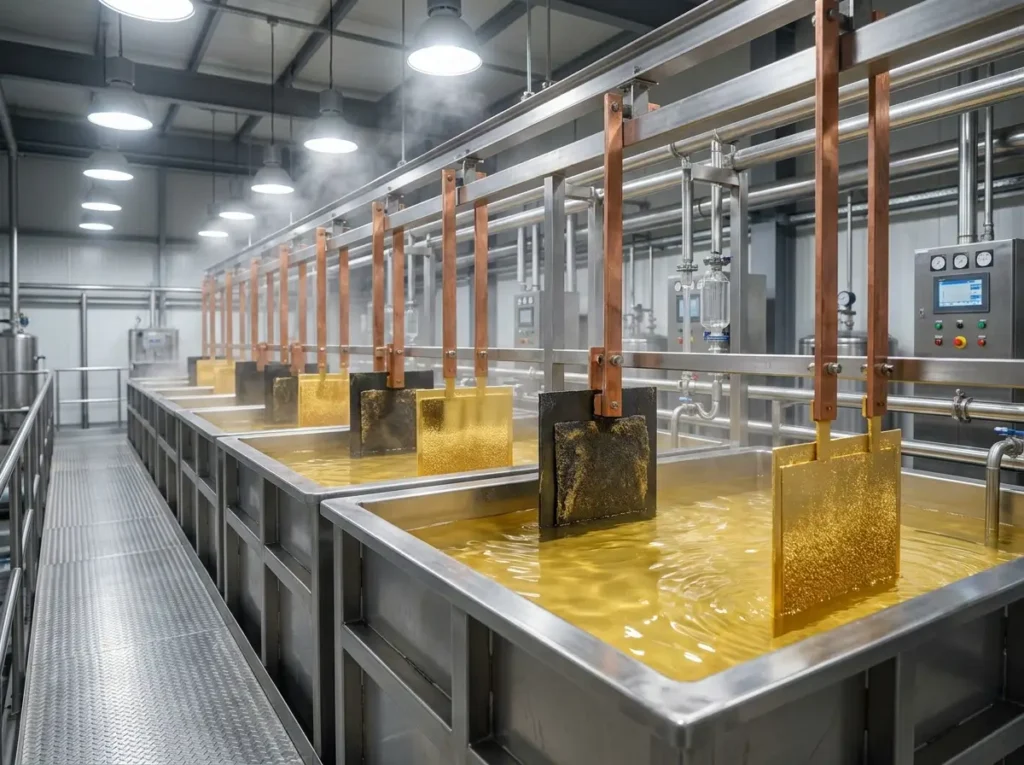
When higher purity is required, refiners turn to the Wohlwill process, an electrolytic technique. Impure gold serves as an anode submerged in an acid-based electrolyte solution, while an electric current gradually deposits pure gold onto a cathode.
This process takes longer than chlorine treatment, but it can push purity above 99.9%. Refiners often combine both methods, using the Miller process first for speed, then Wohlwill refining for final purification.
Aqua Regia Method
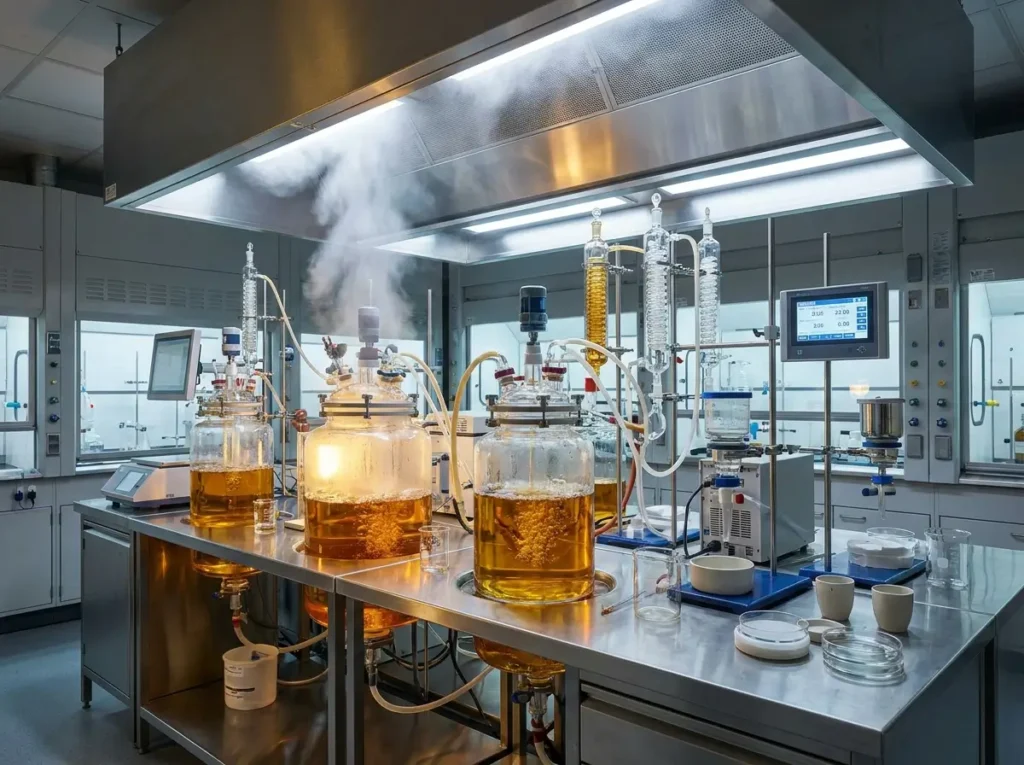
Aqua regia, a blend of nitric and hydrochloric acid, dissolves gold completely, something few substances can do. Refiners use it mainly for smaller batches or when recovering gold from electronic scrap, jewelry fragments, or mixed materials.
Once dissolved, chemical agents cause pure gold to precipitate out of the solution, leaving contaminants behind in the liquid.
Purity Standards and the Karat System
Refined gold doesn’t stay in one universal form. Instead, it enters the market according to fineness levels tied to the karat system.
- 24 karat gold represents 99.9% purity, the highest standard for investment bars.
- 22 karat gold contains about 91.6% gold, common in parts of the jewelry industry.
- 18 karat and 14 karat golds mix in more alloy for durability, often used in rings and everyday jewelry.
Major refineries follow guidelines set by organizations like the London Bullion Market Association, which maintains “Good Delivery” standards for gold bars traded internationally. These standards dictate acceptable purity levels, weight tolerances, and refiner accreditation.
Testing and Certifying Refined Gold
Purity claims aren’t taken on faith. Refiners rely on fire assay testing, a centuries-old method involving melting a sample with lead and other agents to isolate pure gold content precisely.
Modern facilities also use X-ray fluorescence (XRF) analysis, a fast, non-destructive method that measures purity by reading a sample’s atomic composition. Once testing confirms results, refiners stamp bars with their mark, the purity level, and a serial number for traceability.
Where Gold Refining Happens
Large-scale refining happens at accredited industrial facilities equipped to handle bulk doré bars and maintain strict quality control. These refineries often serve mining companies directly, converting raw output into market-ready bars.
Smaller-scale refining also exists, particularly for recycled gold. Old jewelry, electronic components, and dental scrap all contain recoverable gold, and specialized refiners extract and purify this material using similar chemical processes on a reduced scale.
Recycled gold refining has grown steadily, offering an alternative source of pure gold without new mining.
Key Takeaways
- Doré bars, not pure gold, are what leave most mining operations.
- The Miller process offers speed, while Wohlwill refining achieves higher purity through electrolysis.
- Aqua regia suits smaller batches and gold recovery from scrap materials.
- Karat levels and organizations like the LBMA define purity standards across the industry.
FAQs
What is the difference between doré and refined gold?
Doré is a raw, impure gold bar produced at mining sites, while refined gold has undergone chemical or electrolytic processing to reach a certified purity level.
How do you refine gold from jewelry or scrap?
Refiners typically use aqua regia to dissolve gold from mixed materials, then precipitate pure gold out of the solution chemically.
What purity level is considered pure gold?
Gold reaching 99.9% purity or higher is generally classified as pure, often labeled 24 karat in the jewelry and investment markets.


